
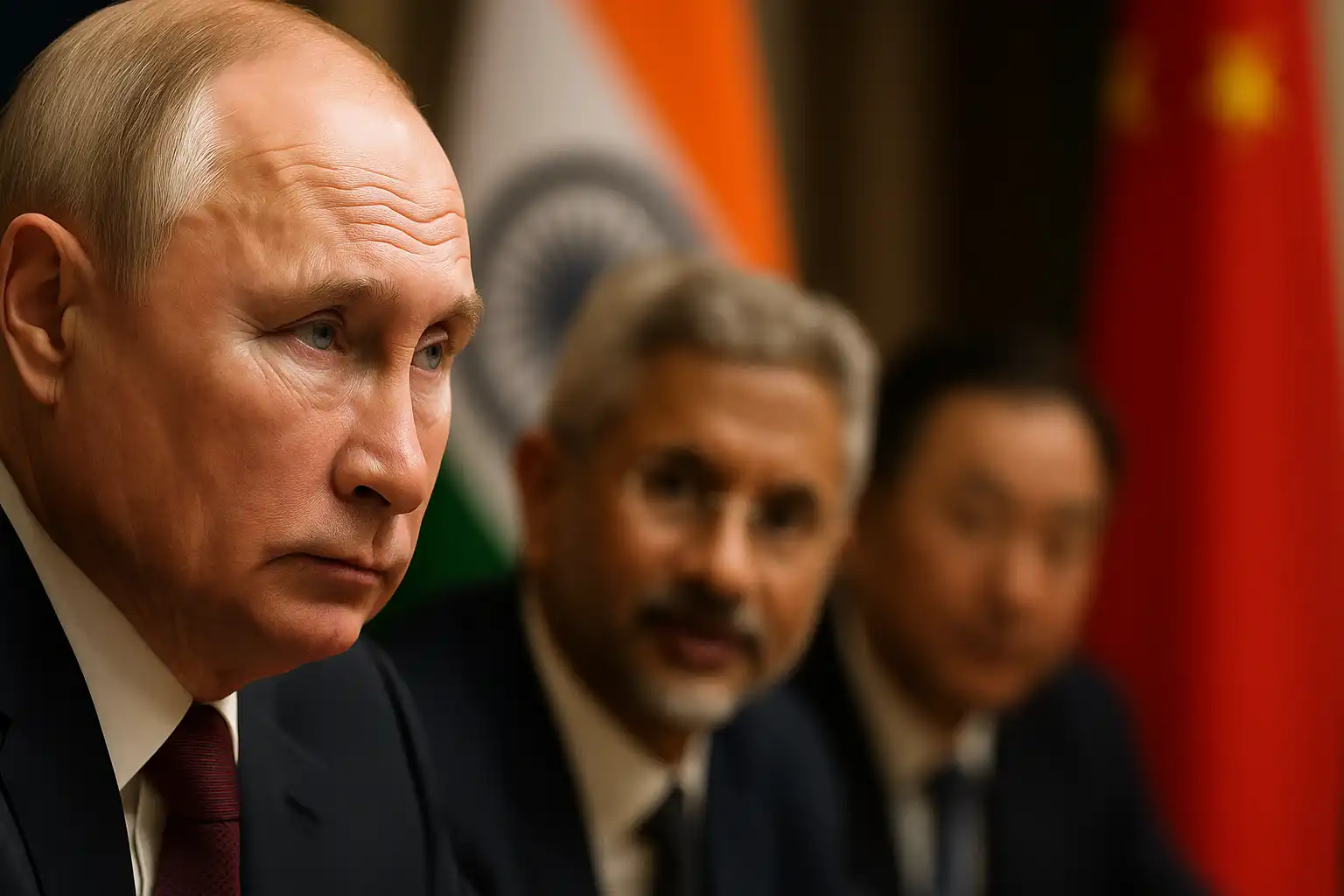
As Putin prepares to visit India, most of the world frames it as a routine geopolitical interaction. I see it differently. This moment is a unique window into a long-standing psychological dynamic between Russia and India.
Through the lens of Putin’s psychological analysis, we uncover a pattern of emotional trust, behavioural signals, and memory-rooted diplomacy that quietly influences the Russia–India relationship more than any defence deal or policy document.
Why This Visit Is Not Just Diplomacy: My Perspective
In my view, this visit matters because it shows how psychology drives statecraft. Traditional analyses focus on defence ties or energy cooperation, but the real story lies in how Putin sees India internally.
This is where Indo-Russian diplomatic psychology becomes essential.
Unlike his approach toward other world powers, Putin enters his engagements with a mindset shaped by decades of emotional anchoring, trust, and perception management.
R&AW’s Psychological Profile of Putin: An Insider Perspective
For over two decades, the R&AW Russia’s Desk has studied Putin’s behavioural dynamics. Their findings form a comprehensive Putin psychological profile, built from:
- Facial micro-expressions
- Tonal variations during diplomatic talks
- Stress indicators under pressure
- Body posture and orientation
- Decision-making patterns
- Triggers that shift him from calm to defensive
My interpretation?
This is one of the most advanced behavioural intelligence exercises conducted by any Indian agency.
The foundation of Putin’s behavioural analysis revolves around understanding not just Putin’s strategies, but Putin’s emotional equations with specific nations.
India’s Most Powerful Advantage: Emotional Trust
One thing is clear to me: Putin trusts India more than he trusts almost any other major power.
This is not an abstract theory; it is rooted in history.
Why?
When Russia was weak in the 1990s and early 2000s:
- India never humiliated Russia
- India never leveraged its vulnerability
- India never treated Russia like a fallen empire
- India remained consistent, respectful, and cooperative
Western nations mocked Moscow.
India did not.
This formed a deep psychological imprint, known as Putin’s memory anchoring, an emotional memory that influences Putin’s strategic choices even today.
This is why Putin’s psychological analysis consistently shows India as a “safe psychological zone.”
How Putin Behaves With Different Powers: A Comparative View
| Country | Behavioural Tone | Intelligence Interpretation |
|---|---|---|
| United States | Guarded, stiff | Defensive posture |
| China | Tactical, cautious | Dragon Shadow Anxiety Russia China |
| Europe | Sarcastic, dismissive | Skeptical alignment |
| India | Relaxed, open | Emotional safe-state |
From my observation, India is the only major nation where Putin demonstrates consistent emotional calm, proof of long-term trust.
China: The Hidden Psychological Pressure Behind the Visit
A key component of Putin’s psychological analysis involves understanding his anxiety toward China’s rising dominance.
Putin is mentally aware of:
- Russia’s growing dependence on China
- China’s economic leverage over Russia
- Potential loss of strategic autonomy
- Beijing’s influence is shaping Eurasian politics
This stress pattern is described in Russian intelligence circles as:
Dragon Shadow Anxiety Russia China
It means China casts a psychological shadow over Russia’s choices, including how Russia positions itself between Beijing and New Delhi.
This makes India a psychological and geopolitical stabiliser for Putin.
What R&AW Will Observe During the Visit: My Assessment
1. Facial and Tonal Shifts
These signals reveal Putin’s internal emotional state:
- genuine vs diplomatic smile
- eyebrow tension
- blink rate (stress indicator)
- vocal tone softness or hardness
These are core inputs into Putin’s psychological analysis.
2. Body Language and Movement Cues
During the Putin body language India visit review, R&AW will examine:
- handshake duration
- shoulder relaxation
- personal space comfort
- foot direction (reveals subconscious alignment)
These signs often reveal more truth than formal agreements.
3. Verbal Framing and Statements
Putin’s choice of words will determine Russia’s directional preference:
- “Multipolar stability”: India is central to Eurasian balance
- “Eurasian partnership”: China’s influence remains strong
Even a single sentence can shift the interpretation of India and Russia’s geopolitical alignment.
Why Putin Needs India Now More Than Ever: My View
Modern geopolitics shows a clear reality:
Russia needs India more than India needs Russia.
Why?
- Western hostility has closed most doors
- China’s dominance threatens Russian autonomy
- Europe remains sceptical
- Domestic pressures are rising
India provides:
- a neutral, respectful partner
- no coercive diplomacy
- strategic breathing space
- emotional safety
This emotional dimension is crucial in Putin’s psychological analysis.
The Real Stakes of This Visit
This visit is not about optics; it is about decoding psychological positioning.
Putin is balancing:
- long-term emotional trust with India
- strategic need for China
- geopolitical isolation
- domestic political pressures
- global realignment toward multipolarity
India becomes the anchor point between Putin’s emotional security and Russia’s strategic survival.
Conclusion: My Final Perspective
As I see it, this visit is not merely a diplomatic exchange but a psychological signal. The dynamics of trust, emotional memory, and behavioural alignment will shape the next phase of India–Russia ties.
Through this refined Putin psychological analysis, one conclusion is clear:
India remains the only major power where Putin feels emotionally safe.
And in geopolitics, emotional safety often determines strategic alliances more than ideology, economics or defence pacts.
The next chapter of India–Russia relations will be written not just in agreements, but in the subtle behaviours and emotional cues revealed during this visit.