
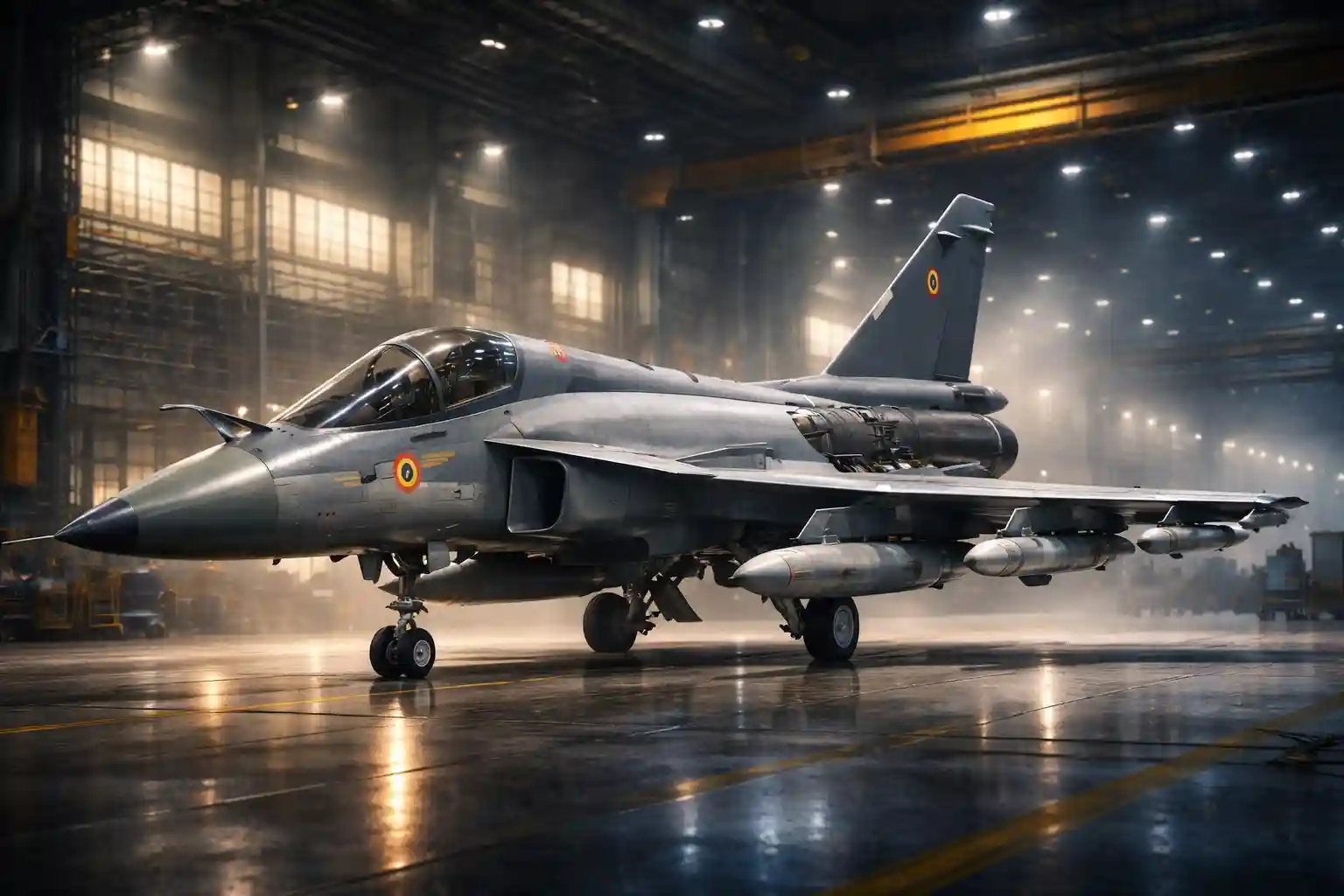
A major shift is underway in India’s next fighter programme. ADA has issued a tender to upgrade the LCA AF Mk2 performance model, the digital engine that predicts how Tejas Mk2 will climb, turn, accelerate and carry weapons in real combat.
Such updates are ordered only when a fighter is close to its first flight. This move signals that Mk2 is entering its most critical phase, where precise aerodynamic and propulsion modelling becomes essential for safe, accurate and high-confidence flight testing.
Why the LCA AF Mk2 Performance Model Needs a Full Upgrade
The LCA AF Mk2 performance model is the backbone of all predictions made before the aircraft takes to the sky. It determines:
- maximum speed
- climb rate
- turn performance
- stability margins
- fuel burn and range
- payload influence on drag and manoeuvrability
- stall behaviour and G-limits
ADA’s tender indicates a move toward high-accuracy computational models, wind-tunnel data correlation, and digital-twin simulation, ensuring that Tejas Mk2 behaves in flight exactly as predicted on paper.
This update is vital because the Mk2 features:
- a more powerful GE F414 engine
- a longer fuselage
- new aerodynamics
- expanded payload capability
- new avionics and mission systems
Every one of these affects performance, requiring fresh modelling.
Tejas Mk2 Prototype 2026: HAL Confirms Second Build
Tejas Mk2 Fuel Upgrades: 7400kg Drop Tanks
What ADA’s Tender Covers: A Technical Breakdown
Aerodynamic Model Refinement
To prepare the Tejas Mk2 for flight trials, ADA wants precise updates to:
- lift and drag coefficients across multiple angles of attack
- transonic and supersonic drag behaviour
- CFD-refined aerodynamic surfaces
- stability and control derivatives
- aero-thermal effects on the intake and fuselage
- payload-induced aerodynamic distortion
These refinements allow safe flight-envelope expansion and early validation of the Mk2’s dogfight agility, high-AOA performance, and supersonic acceleration.
Propulsion Model Enhancement
With the transition from the F404 to the F414-INS6 engine, ADA requires updates to:
- thrust curves at altitude
- afterburner fuel flow prediction
- engine surge margins
- hot-and-high behaviour
- aero-propulsive interactions
This directly impacts the Mk2’s combat radius, endurance, and intercept timelines, which the IAF will evaluate during mission-planning simulations.
Performance Modelling & Digital Twin Updates
The tender includes major upgrades to:
- computational performance models
- digital-twin simulation environments
- mission-planning algorithms
- flight control laws (for FBW integration)
- takeoff–landing performance estimators
- payload-performance tradeoff models
These tools allow ADA and the IAF to simulate real missions with high accuracy before actual flight tests begin.
India’s LCA Mk2 EW Suite rise shapes its future air power
Role of the LCA AF Mk2 Performance Model in First Flight Readiness
No fighter goes into first flight without a validated performance model. For the Mk2, this ensures:
Flight Safety
Pilots know the stall margins, pitch behaviour, roll rate, and structural load limits even before leaving the runway.
Reliable Engine-Airframe Integration
The F414’s higher thrust must match the aerodynamic predictions to ensure stable airflow and thermal management.
Flight-Envelope Expansion
The aircraft will gradually explore:
- low-speed stability
- high-speed transonic region
- high-AOA manoeuvres
- supersonic sectors
A robust model prevents unseen aerodynamic surprises.
Weapons Integration Validity
Tejas Mk2 will carry:
- Astra Mk2
- Astra Mk3 (future)
- SAAW
- Smart bombs
Each store affects drag, vibration and stability. Accurate modelling ensures safe testing.
ADA issuing this tender is therefore a major readiness signal — the aircraft is approaching rollout and taxi trials.
How the Updated Performance Model Enhances Mk2’s Combat Potential
More Accurate Mission Predictions
The updated model allows precise calculation of:
- combat radius with different payloads
- fuel consumption
- endurance time in CAP missions
- supersonic acceleration to intercept targets
This makes Tejas Mk2 far more predictable and reliable in real missions.
Improved Dogfight Performance Modelling
Given its aerodynamic upgrades, modelling will confirm improvements in:
- instantaneous turn rate
- sustained turn rate
- energy retention
- nose-pointing ability at high AOA
These define Mk2’s dogfight competitiveness against the J-10C, F-16V, and Gripen E.
Optimised Flight Control Laws
Accurate modelling feeds into:
- FBW gain schedules
- auto-trim logic
- high-AOA protection systems
- stall recovery algorithms
This reduces pilot workload and increases safety margins.
Where This Tender Fits in the Mk2 Development Timeline
Iron Bird Testing Progress
ADA has already advanced:
- flight-control system integration
- electrical load testing
- hydraulic system validation
- digital twin–based subsystem simulation
EW Suite, Radar & Avionics Updates
Other tenders show work on:
- Uttam Mk2 AESA integration
- new electronic warfare suite
- advanced cockpit displays
- updated mission computer architecture
Mk2 Nearing Rollout
Performance model refinement is usually one of the last major pre-flight steps.
The programme is aligned for:
- high-speed taxi tests
- First flight of the prototype
- Initial airworthiness clearance
This tender confirms significant program maturity.
Final Thoughts: Mk2 Moves Closer to the Sky
Upgrading the LCA AF Mk2 performance model is not a routine step. It is a decisive indicator that India’s next-generation fighter is nearing its first airborne moment. With updated aerodynamics, propulsion predictions, digital-twin modelling and mission tools, the Tejas Mk2 enters its test phase with unprecedented accuracy and confidence.
If executed effectively, this tender will accelerate the Mk2’s journey toward becoming a powerful indigenous 4.5-generation fighter, strengthening India’s air superiority and technological independence for decades.