
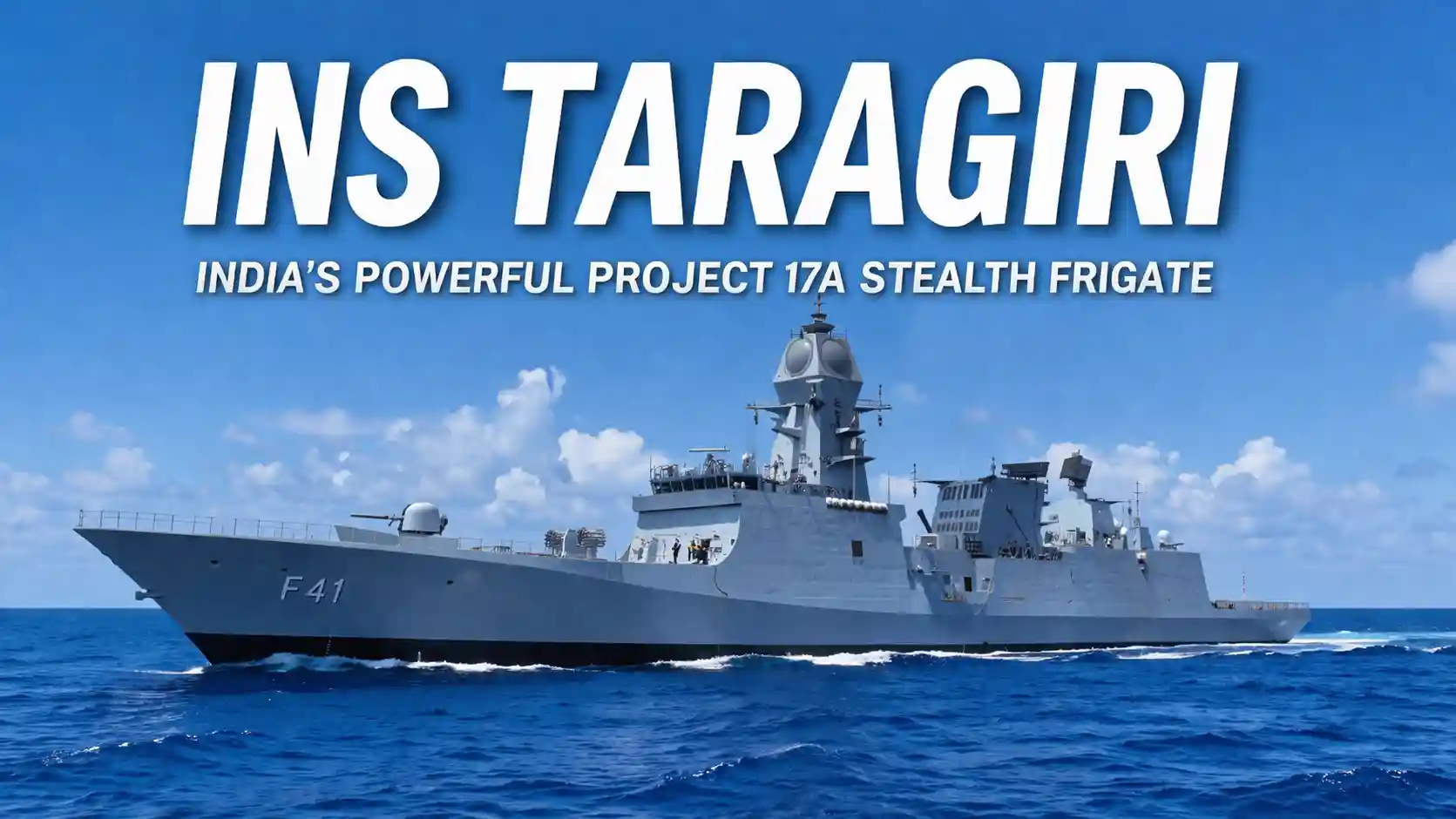
The Indian Ocean is no longer just a trade route. It is now a strategic zone where naval presence, surveillance capability, and rapid response determine influence. In this evolving environment, INS Taragiri enters the fleet as a modern Indian Navy stealth frigate, designed for high-end maritime operations.
As part of the Project 17A program, this ship represents India’s transition toward stronger indigenous defence manufacturing and a more capable surface fleet.
What INS Taragiri Is
INS Taragiri is a Nilgiri-class (Project 17A) stealth frigate of the Indian Navy, designed for multi-role naval warfare. It is built to detect, track, and respond to threats across air, surface, and underwater domains, making it a key part of India’s modern naval fleet.
This class is built to operate across multiple combat environments:
- Air threats, including aircraft and incoming missiles
- Surface threats, such as enemy ships
- Subsurface threats, including submarines
Its flexibility allows it to perform both independent missions and coordinated fleet operations.
Why INS Taragiri Matters to India
INS Taragiri matters because India’s security and trade depend heavily on safe maritime routes. A modern stealth frigate like Taragiri strengthens naval presence, improves response capability, and supports India’s strategic position in the Indo-Pacific region.
INS Taragiri strengthens India’s maritime position in three key ways:
- Protects critical shipping routes
- Improves naval deterrence capability
- Expands operational reach in the Indo-Pacific region
The deployment of stealth frigates in the Indian Navy ensures faster response and higher survivability during operations.
Class and Project Identity
INS Taragiri belongs to the Nilgiri-class under the Project 17A program, which represents the next generation of Indian Navy stealth frigates. This class is designed with improved stealth, advanced systems, and faster construction methods compared to earlier warships.
Development Background
The Project 17A frigate program was initiated to enhance India’s naval strength with modern, stealth-capable warships.
INS Taragiri was:
- Constructed at Mazagon Dock Shipbuilders Limited
- Launched in 2022
- Delivered to the Indian Navy in 2025
This program uses modular construction, where different sections of the ship are built simultaneously and later assembled. This approach reduces overall construction time and improves efficiency.
Project 17 vs Project 17A: What Changed
The Project 17A frigates, including INS Taragiri, are an advanced evolution of the earlier Project 17 warships. These newer frigates are built with improved stealth shaping, greater automation, and modular construction techniques. As a result, they offer faster construction, better survivability, and stronger operational performance for the Indian Navy.
INS Mahe: India’s First Private ASW Warship
Key improvements include:
- Better stealth design for lower detectability
- Higher automation for improved onboard efficiency
- Modular construction for faster building and assembly
- Improved combat readiness in modern naval operations
- Greater survivability in high-threat environments
Design Philosophy and Stealth Technology
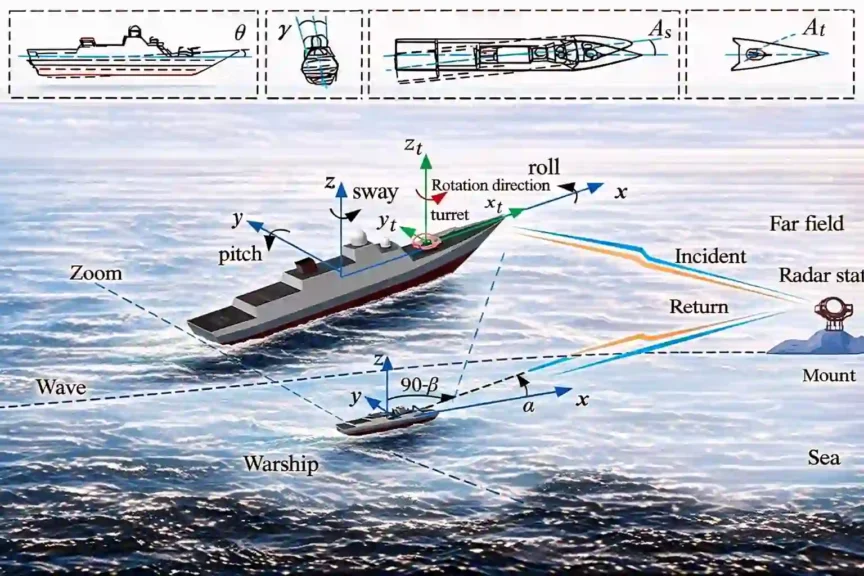
The design of INS Taragiri focuses on minimising detection while maintaining combat capability.
Key design features include:
- Angular hull surfaces to reduce radar reflection
- Low heat emission to limit infrared detection
- Noise reduction systems to avoid sonar tracking
- Integrated sensor mast to conceal electronic systems
These elements allow the ship to operate with a reduced detection profile in hostile environments.
Key Specifications of INS Taragiri
| Feature | Details |
|---|---|
| Class | Nilgiri-class (Project 17A) |
| Type | Stealth guided-missile frigate |
| Length | Approx. 149 meters |
| Displacement | Approx. 6,700 tonnes |
| Speed | 28+ knots |
| Crew | Around 170 personnel |
| Role | Multi-mission naval operations |
These specifications place INS Taragiri among the most capable modern frigates in the region.
Stealth and Structural Advantages
The structure of INS Taragiri is optimised for both protection and performance.
Major advantages:
- Reduced radar visibility increases survivability
- Advanced electronic warfare systems support defence
- Strong hull design enhances durability
- Automated systems reduce operational workload
Compared to older warships, this design improves both efficiency and mission endurance.
India’s Defence Ecosystem and Atmanirbhar Bharat
India is actively strengthening its defence manufacturing capabilities.
The Atmanirbhar Bharat defence initiative focuses on:
- Indigenous warship production
- Reduced dependence on foreign technology
- Development of domestic defence industries
INS Taragiri reflects this shift toward self-reliance and technological independence.
Role of Private Companies in Shipbuilding
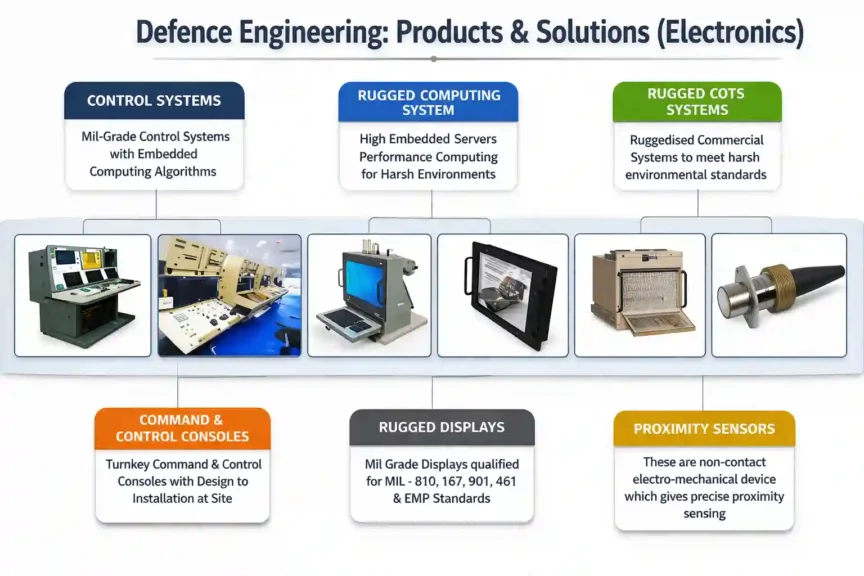
Private companies are playing a growing role in India’s defence sector.
Key contributors include:
- Larsen & Toubro
- Bharat Electronics Limited
- Tata Advanced Systems
Their involvement includes:
- Manufacturing critical components
- Developing radar and communication systems
- Supporting advanced engineering solutions
This collaboration improves both innovation and production speed.
Public vs Private Contribution in Shipbuilding
| Public Sector | Private Sector |
|---|---|
| Warship design and integration | Component manufacturing |
| Final assembly and testing | Technology innovation |
| Naval compliance and standards | Engineering efficiency |
| Strategic planning | Supply chain support |
This partnership is essential for modern defence production.
Operational Mission Scenarios
INS Taragiri is designed for a wide range of missions:
- Anti-submarine warfare using sonar systems
- Air defence against aerial threats
- Surface combat against hostile vessels
- Escort missions for larger naval groups
- Maritime patrol and surveillance
This flexibility allows it to adapt to different operational environments.
Indian Navy Showcases Combat Preparedness Through Anti-Ship Missile Tests
Where INS Taragiri Fits in the Indian Navy
Within the Indian Navy, INS Taragiri serves as a versatile frontline warship. It supports larger naval formations, protects vital sea lanes, and responds to threats across air, surface, and underwater domains. Its multi-role capability makes it an important asset in modern maritime operations.
Its role includes:
- Supporting larger naval task groups
- Protecting critical sea routes
- Responding to air threats
- Engaging surface threats
- Tracking and countering submarine threats
- Strengthening the Navy’s multi-mission capability
Future Warfare and Strategic Relevance
Future naval warfare is evolving rapidly. It is becoming more technology-driven, network-based, and multi-domain.
Key trends include:
- Long-range missile engagement
- Advanced surveillance systems
- Integration of ships with air and satellite networks
- Increased submarine threats
INS Taragiri is built to operate in this environment. Its stealth design, advanced sensors, and multi-role capability make it suitable for future naval challenges.
How India Is Building Warships Faster
India’s shipbuilding process has improved with the adoption of modular construction techniques.
This method allows:
- Parallel building of ship sections
- Faster assembly timelines
- Improved quality control
Close coordination between naval engineers, shipyards, and defence industries ensures efficient execution.
Export Potential of Indian Warships
India is gradually entering the global defence export market.
Warships like INS Taragiri offer:
- Competitive pricing
- Modern technology
- Reliable performance
This creates opportunities for India to strengthen defence partnerships with other nations.
Final Thoughts
INS Taragiri represents a clear step forward in India’s naval capability. As a Project 17A stealth frigate, it reflects a shift toward advanced design, stronger combat readiness, and greater self-reliance in defence manufacturing. Its role in the Indian Navy goes beyond present operations, contributing to long-term maritime strength in an increasingly competitive global environment.